
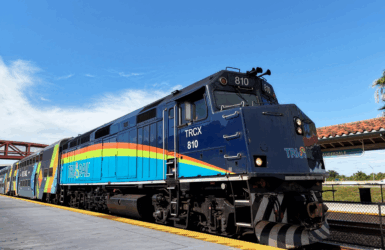
4 transit agencies, 2 partners, and 1 mobile app
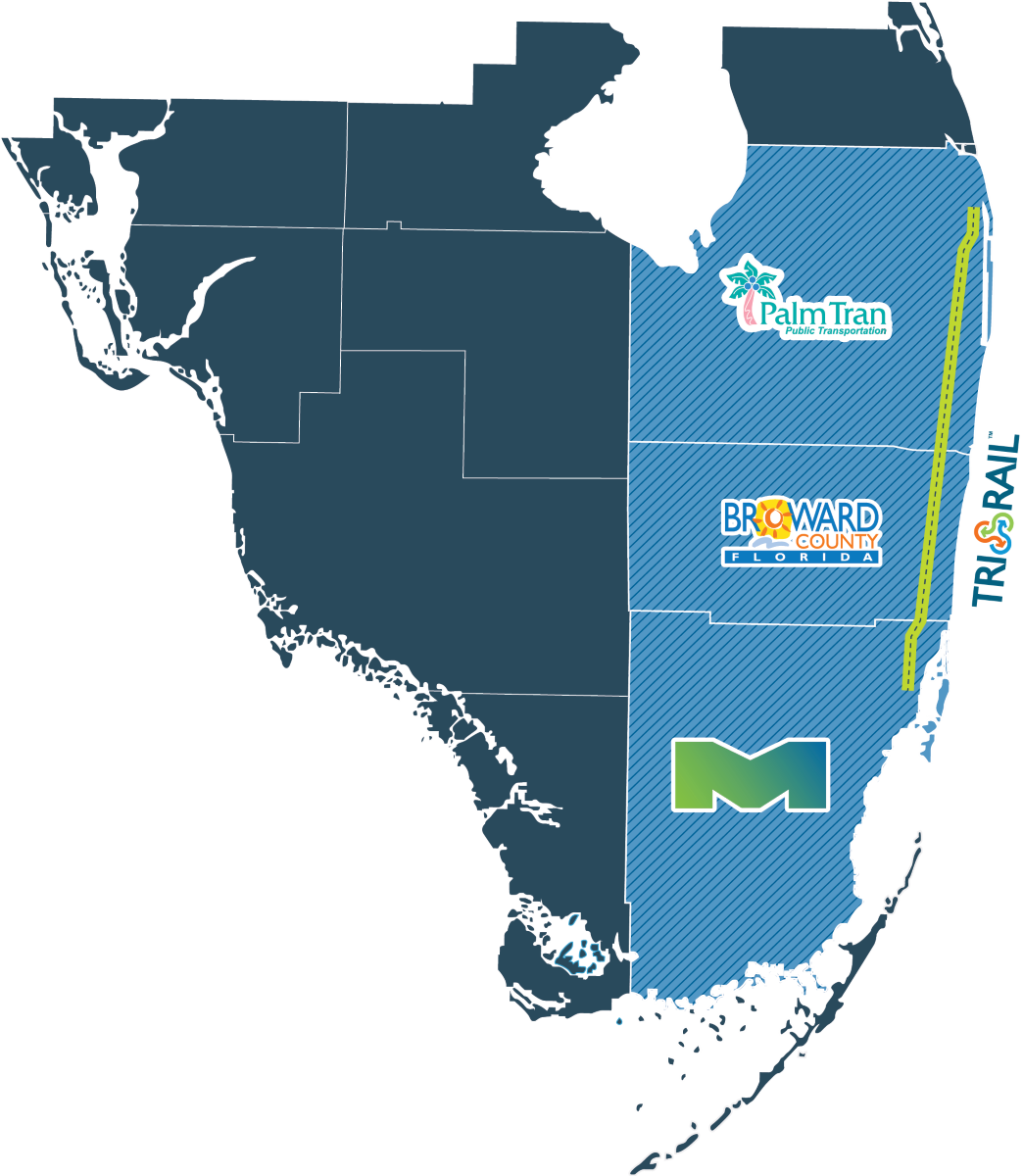
Each of the three counties that make up the Southeast Florida region have their own transit agencies: Broward County Transit, Miami-Dade County Department of Transportation, and Palm Tran. A fourth transit agency, South Florida Regional Transportation Authority (SFRTA), runs Tri-Rail, a commuter rail system that connects the three counties.
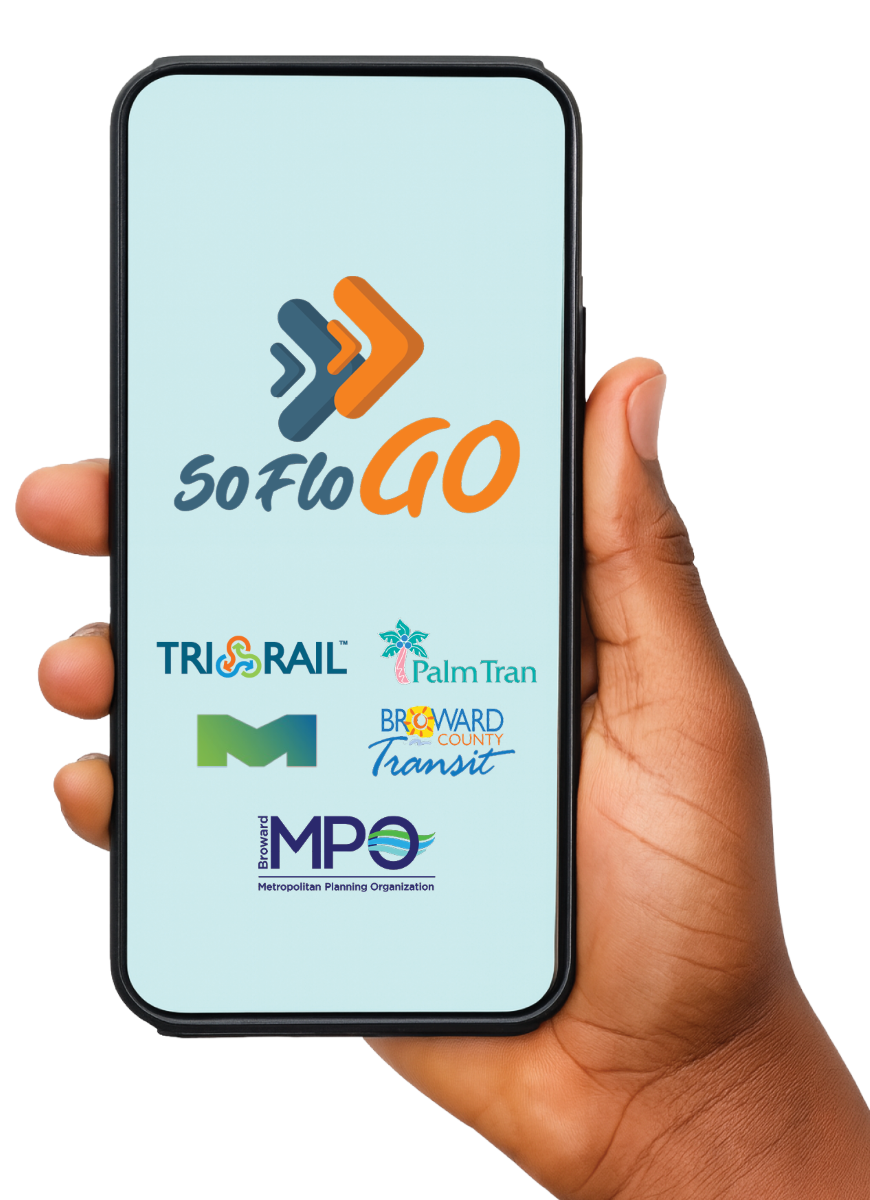
All four agencies already had transit apps, yet because each of the agencies is run independently, the apps were not connected, further adding to disjointed intermodal travel. Giving travelers the ability to seamlessly plan, pay for, and navigate through the region using one platform has been a goal for decades. In 2025, Genfare, in partnership with Moovit, worked with the agencies to create the SoFloGO app, connecting all four transit systems in one platform for the very first time.
Looking for more details?
View and download the full South Florida Regional Transportation Authority (SFRTA) case study here.
Overview
Known for year-round sunshine, international flavor, and a mix of urban energy and coastal relaxation, the Southeast Florida region stretches 120 miles through Palm Beach, Broward, and Miami-Dade Counties along the Atlantic coast. About 50 million people visited the area in 2024 to bask in its vibrant beaches, explore its extensive network of waterways, and discover its historical charm and rich culture.
With six million residents, Southeast Florida boasts a robust local economy. As one of the largest regional economies in the United States, the region has been growing at a much faster rate than the overall U.S. economy. The three-county area hosts two major ports, three international airports, and many regional airports, making it a major hub for healthcare, real estate, finance, and technology.
As South Florida’s population and visitor counts continued to rise, the demand for efficient, interconnected transit solutions became critical. The municipalities made investments in the mass transit systems throughout the years to help improve mobility, but the region’s sprawling layout made it difficult to adopt a more practical and unified system, so people continued to rely on cars rather than mass transit.
A new opportunity
In 2021, a new opportunity to advance regional interoperability in South Florida surfaced. SFRTA needed to update its outdated back-office software, paving the way to developing an integrated fare payment app across all the transit agencies.
At this point, Broward County Transit, Miami-Dade Transit, and Palm Tran were either already or about to begin using Genfare fare collection products, so SFRTA followed suit and chose Genfare to build their new payment solution. SFRTA became the project lead to keep the mission moving forward.
In 2024, Genfare was selected by a committee of representatives from each of the transit agencies to create the SoFloGO app, connecting all four systems in one platform for the very first time.
Solution
Genfare’s flexible, cloud-based platform enables integrated communication and connectivity between smart hardware and software — even technology from other vendors. This made it possible to build a single mobile application that riders across all four transit agencies could use to buy, activate, and validate tickets securely.
To add trip planning and other functionality on top of fare collection, Genfare partnered with Moovit, a global Mobility as a Service (MaaS) solutions provider known for its award-winning app. Moovit and Genfare already had a working relationship, and had previously collaborated on solutions for other transit agencies, such as the Capital District Transportation Authority.
Bonus features
Payment processing was also part of the scope. While the SoFloGO mobile application processes payments from all four agencies and directs revenue back to the correct agency, from the riders’ perspective they are still paying their fares through a single mobile application.
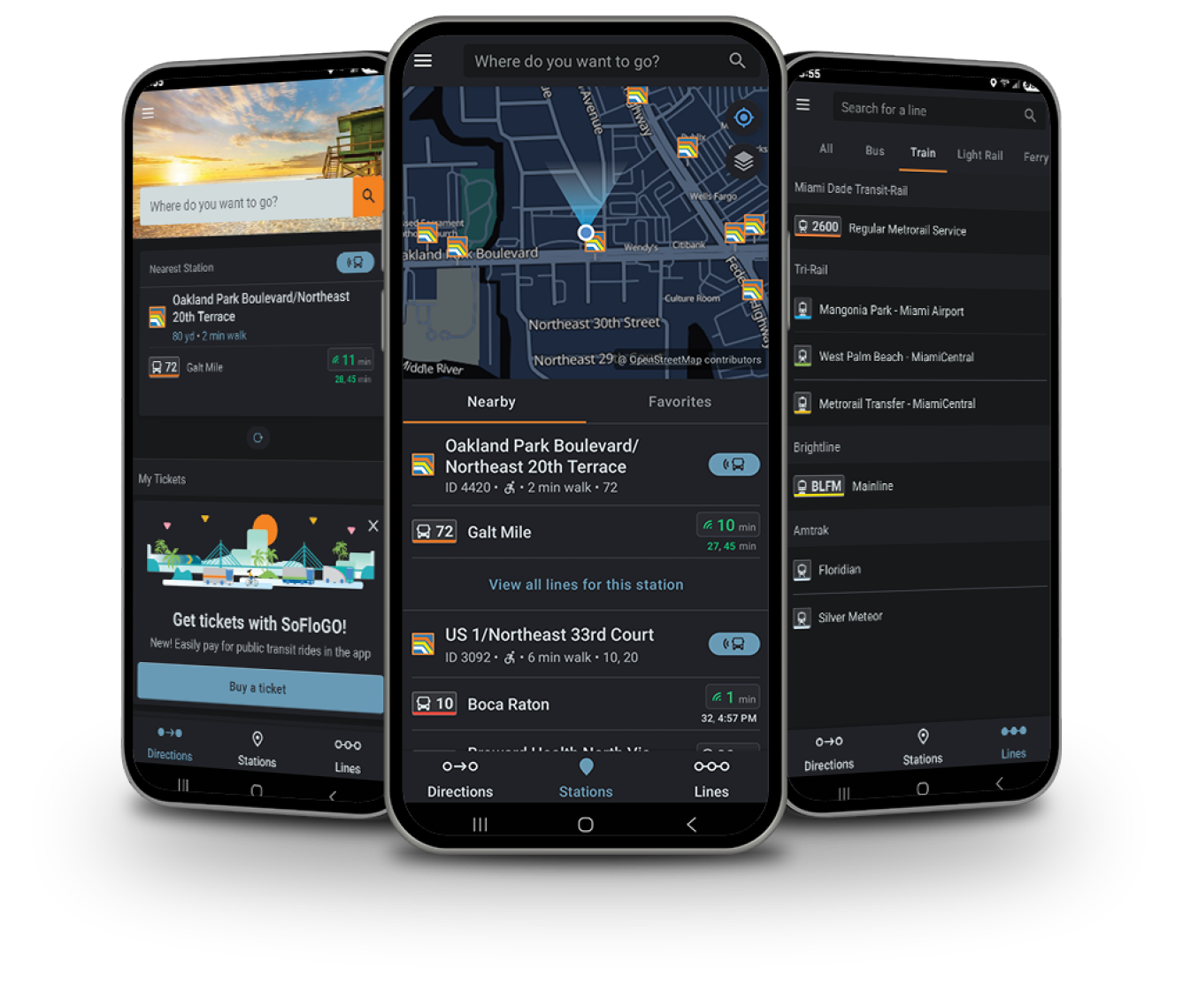
SoFloGO also offers many new features, such as:
- A robust multimodal trip planner including live navigation, augmented reality to help users better visualize buses and train stops, and the option to receive notifications on when to get off the bus or train
- Automated updates to add new features, fix bugs, and optimize performance of the system
- Integrations with CAD/AVL, micromobility, and other third-party services
- A foundation built on the cloud-based Genfare Link to bring all data and reporting into one place, accessible from administrators’ existing computers

People have wanted to create interoperability in the South Florida transit system for many, many years. The SoFloGO app enabled us to take that concept and make it a reality. It was a true partnership between Genfare, Moovit, and the four agencies in South Florida to make the app a reality, and it was done with lightning speed!”
Project implementation and process
“This project required a strong technical foundation, and Genfare had the infrastructure to support what each of these agencies wanted to do in its own way. Moovit already has the tracking infrastructure and can provide an app quickly,” says Moshe Hanan, senior MaaS program manager at Moovit. “Because we’ve worked with Genfare before, we already have direct channels between our developers and their developers established, which makes it easier to test new features or make changes on a large project like this.”
A committee made up of representatives from each transit agency, along with Genfare and Moovit, met weekly to coordinate the project implementation efforts.
“Having a dedicated liaison from each agency was beneficial to this project due to time constraints. This approach streamlined decision making at each phase of the project,” said Kiran Chaudhari, program manager at Genfare. “This helped keep all four agencies aligned and focused on their shared goal.”
The rollout plan included a soft launch on July 14, 2025, followed by an official rollout on August 11. Each agency conducted an advertising campaign to spread the word on social media, transit agency websites, and in local media. Ads were also displayed in and on rail cars, buses, and stations. This approach gave the app great exposure during the four-month campaign and provided riders a chance to slowly get used to using the new app.
Challenges
While two partners developing one app for four transit systems in record time was already a major undertaking, several unique challenges raised the bar even higher. Fortunately, Genfare Link’s limitless scalability and flexibility meant the agencies were able to capitalize on vertical integration.
Some of the challenges Genfare and Moovit helped SoFloGO overcome included:
Mixed fare product offerings
Each agency has different product offerings and fare types (e.g., flat-rate fares, fares based on zones, transfers), and their back-end systems process differently. Because of this, four different sets of rules and processing flows were designed and executed in the Genfare Link back office and in the mobile application.
Payment processing security
Data security was one of the highest priorities, so rider and payment data needed to be kept private and not shared between agencies. This ruled out having one centralized payment system. Instead, credit card transactions for each agency must be managed separately in their own back offices.
Various validation options
Another hurdle was that purchased tickets had to be capable of activation for current or future use. In addition, they needed to be validated in multiple ways, including electronically at fareboxes, faregates, and validators, or visually by transit employees. These variations were accommodated in SoFloGO.
Scaling back to allow a fast implementation
Due to the tight development schedule, some of the features in the original scope did not get added into the app at launch. Because Genfare Link is modular, features like accepting Apple Pay and Google Pay can easily be added in the future.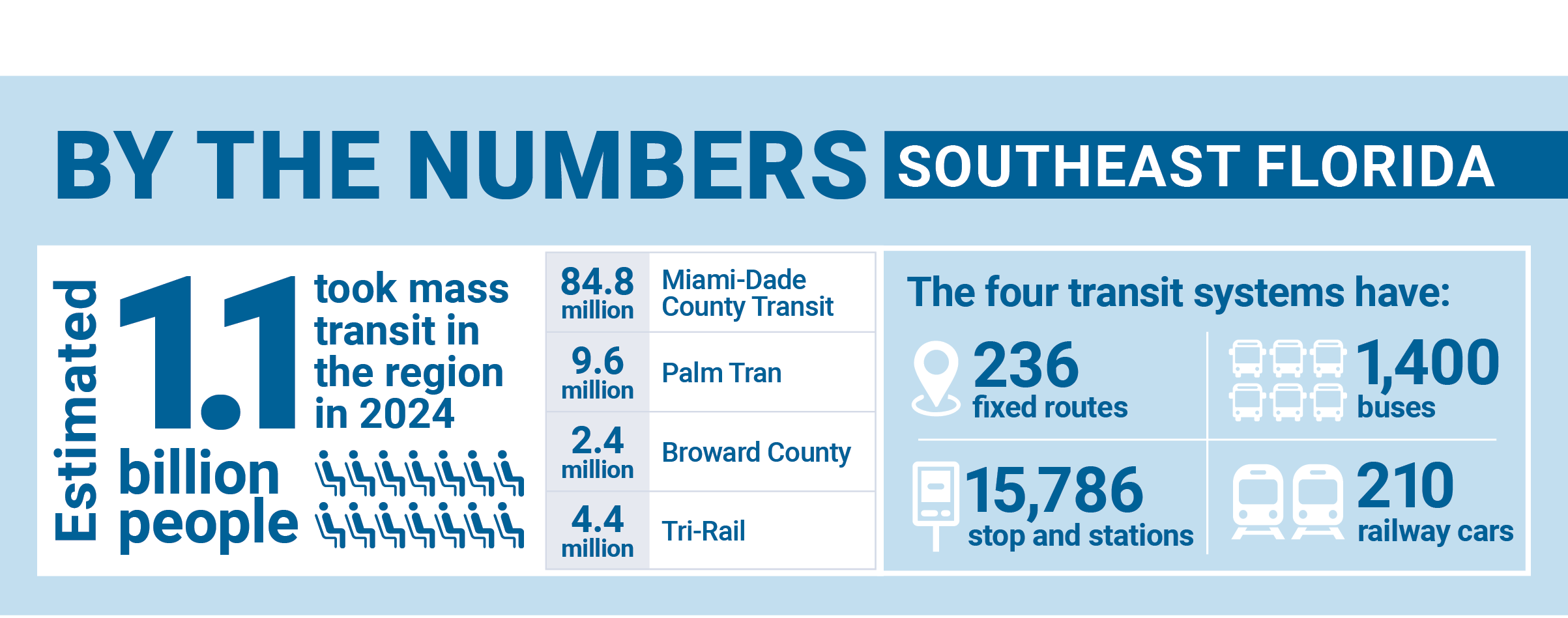
Results
The feedback on the launch of the new SoFloGO app has been highly encouraging. In the first three months, the app was downloaded more than 25,200 times, and over 16,000 people registered with a transit agency to purchase tickets. More than 50 percent of those who downloaded the app registered for Tri-Rail ticketing.
Also in the first months, about 1,200 riders used the app every day during the week, and 800 used it on the weekend, with many people using the app to travel multiple times a day. Growth is expected to continue with word of mouth between residents and as tourists visit the region.
South Florida mass transit users are also taking advantage of the new trip planning feature by mapping their routes through all three counties on the app every day. The top trip planning destination is Miami International Airport.
“The reaction has been so incredible. It’s really easy to use. People love the trip planning capability and being able to get real-time arrival information for all the modes,” says Amanda.
SoFloGO’s debut at APTAtech
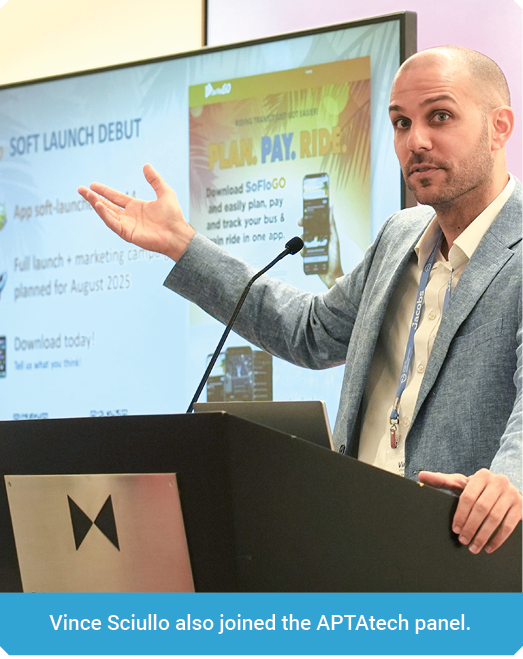
Just days before its official rollout, the SoFloGO app debuted at the American Public Transportation Association’s (APTA) 2025 APTAtech conference. The SoFloGO team conducted a panel on how its innovative solutions are transforming public transit by enhancing both accessibility and operational efficiency.

Genfare was a pivotal piece of the SoFloGO puzzle. There's no question. We had a limited scope, we had a limited budget, and we had very limited time. They were so good at interpreting our wants and desires for the app.

Takeaways
Outside of finding the right technology solutions, those involved in this project appreciated the patience and collaboration that everyone showed. The combination of open technology and everyone’s spirit of collaboration were instrumental in bringing the SoFloGO app to life.
“If you’re going to work across multiple agencies, get the right people in the room to figure out what business rules, agreements, or policies you’ll need to modify up front to deliver what you want before you spend any money on technology,” says Vince Scuillo, project manager at SFRTA.
SoFloGO‘s success proved that a regional collaboration is possible with the right partners and approach.
The future is as bright as the South Florida sun
Broward County Transit, Miami-Dade Transit, Palm Tran, and Tri-Rail all agree that the SoFloGO app customers are using today is just the first iteration. They are looking forward to having more time and funding available to add features they first envisioned. Plus, Genfare and Moovit are always making advancements in their technology.
Vince adds, “This isn’t like the end of the story here. We want to be able to develop and grow, and scale over time. So more to come.”

We’ll make it work for you
We understand the funding and timing constraints transit agencies face. Whether you need a rapid, full-solution fare collection implementation or a phased approach spread out over multiple years, Genfare can make it happen.
Contact your Business Development Director to learn more about how Genfare can support your transit agency’s needs within your budget and timeframe.