
The November 2026 election delivered significant support for public transportation, with new transit funding and renewals that will help agencies maintain service and expand mobility.
For transit riders, a funding measure ultimately matters because of what it makes possible: a bus that arrives more often, service that runs later, or a connection that remains available.
Preliminary results from the November 3 election show that many communities were willing to support those investments. Voters approved substantial funding to keep buses and trains running, while backing service expansion in several regions. Local defeats also underscore that support for transportation funding varies from one community to another.
A strong national result, with important distinctions
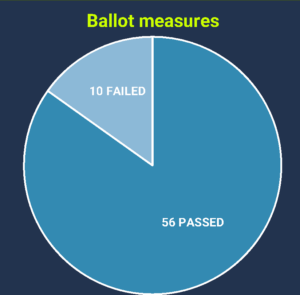 The American Public Transportation Association and its Center for Transportation Excellence reported that as of November 9, 56 of 66 November ballot outcomes favored transit—roughly 85 percent—with $43.8 billion in long-term dedicated funding approved. That total includes new taxes, renewals and revenue collected over multiple years. It represents a significant commitment to public transportation, rather than an immediate annual increase in agency budgets.
The broader transportation picture was also positive. ARTBA also high local approval among 294 transportation measures in 22 states, with most measures renewing existing funding. Together, the results show substantial support for maintaining transportation investment.
Preserving service in the Bay Area
The Bay Area produced two of the election’s most consequential transit funding results.
The Regional Transit Measure establishes a 14-year sales tax expected to generate approximately $1 billion annually. San Francisco separately approved Proposition H, a 15-year parcel tax expected to provide about $160 million annually for Muni. The measures create distinct funding streams to sustain operations and improve service.
The regional measure held 62.2 percent support in the Metropolitan Transportation Commission’s November 6 update. While the returns remained unofficial, the result signaled strong regional support for investing in the buses and trains that residents depend on.
Connecting additional revenue to better service
Several communities also supported proposals tied to expanded mobility:
- Tacoma, Washington: Pierce Transit’s Proposition 1 raises its sales tax from 0.6 percent to 0.9 percent and supports a planned 47 percent increase in service, phased in from 2027 through 2032. The expansion includes more frequent buses, longer service hours and improved paratransit—concrete benefits that riders can understand and experience.
- Seattle, Washington: Voters supported doubling the city’s transit sales tax from 0.15 to 0.3 percent. The replacement measure is expected to generate $138 million annually, including revenue that continues the existing funding stream.
- Lawrence, Kansas: Voters approved an increase and extension of its transit sales tax. Both results support a combination of service preservation and additional investment.
- Colorado’s Front Range region: Voters backed a different kind of connection: A permanent 0.333 percent sales tax for the Colorado Connector passenger rail service between Fort Collins and Pueblo, projected to generate $295 million annually. That vote establishes a funding foundation for intercity rail, with further implementation work required before service begins.
- Converse, Texas: Voters rejected withdrawal from VIA. That outcome preserves transit participation, even though it generates no new tax revenue.
Local setbacks remain significant
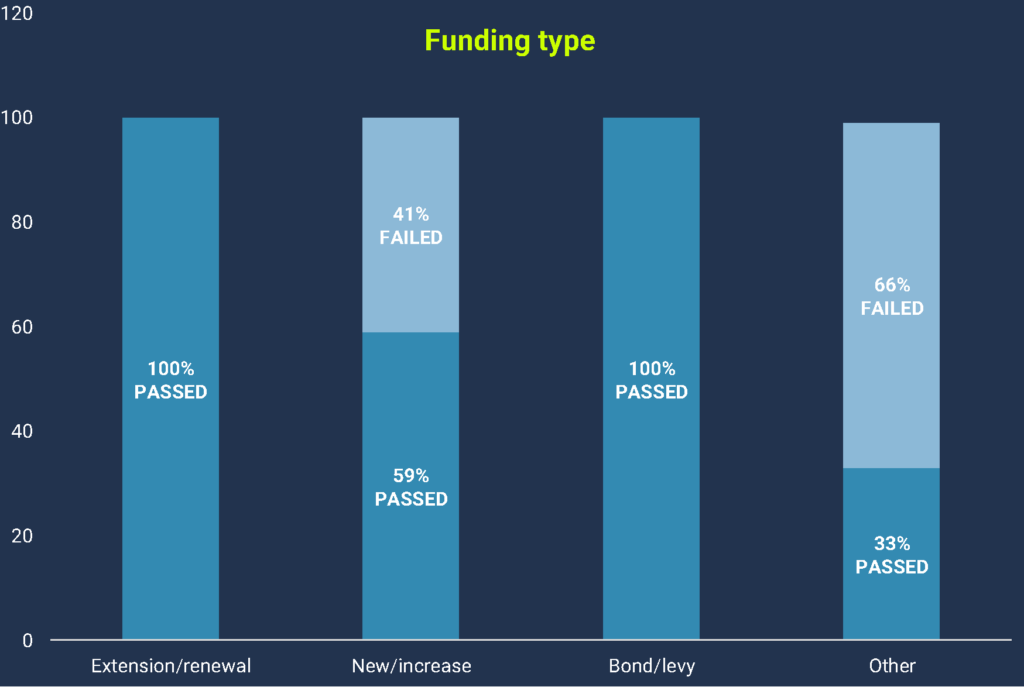
The transit scorecard recorded funding defeats in Delaware County, Ohio; Tempe, Arizona; Douglas County, Georgia; Fresno County, California; and Greenville County, South Carolina. Several proposals combined roads and transit in broader spending packages. The outcomes demonstrate local differences, although the results alone do not explain why voters rejected each measure.
In Fresno, the countywide replacement transportation tax, Measure S, trailed while city Measure D led. The city’s general-purpose revenue does not establish an equivalent countywide transit funding stream, leaving an important distinction between the two outcomes.
Turning public support into rider benefits
For transit agencies and industry partners, the next challenge is delivery. Approved funding creates an opportunity to preserve essential connections, expand service and make public transportation easier to use.
Clear communication will remain essential. Riders and taxpayers need to understand what each measure funds, when improvements will arrive and how progress will be measured. For Genfare and the broader transit community, these results reinforce a shared priority: Helping agencies turn public investment into dependable, accessible service.