
 Mike Horbrook and his colleagues conduct 50-75 hands-on maintenance training courses for hundreds of people each year, yet make sure each attendee gets their individual learning needs met.
“We have a standard syllabus we start with, but once we meet everyone, we customize it to their specific needs,” he says. “That can mean spending more time on a specific component like the TRiM or bill transport or accommodating different learning styles or levels of experience.”
Mike emphasizes that maintenance training is not just for new procurements – almost any customer can benefit from it. This includes refresher sessions for current agency technicians and getting new employees up to speed when there is turnover among agency staff. In-person training can be held at the transit agency or at Genfare’s Chicago-area headquarters.
Mike recently welcomed Matthew Suta, maintenance technician at WeGo Public Transit in Nashville, Tennessee, to the Genfare offices for several days of one-on-one training. Matthew had transitioned from diesel mechanic to fare collection technician upon the retirement of his predecessor.
“I was trained by the guy I replaced and had been in my new position for five months, plus I had a lot of transferable skills between building computers and years as an auto mechanic,” says Matthew. “But I still learned a lot in Chicago.”
Hands-on maintenance training
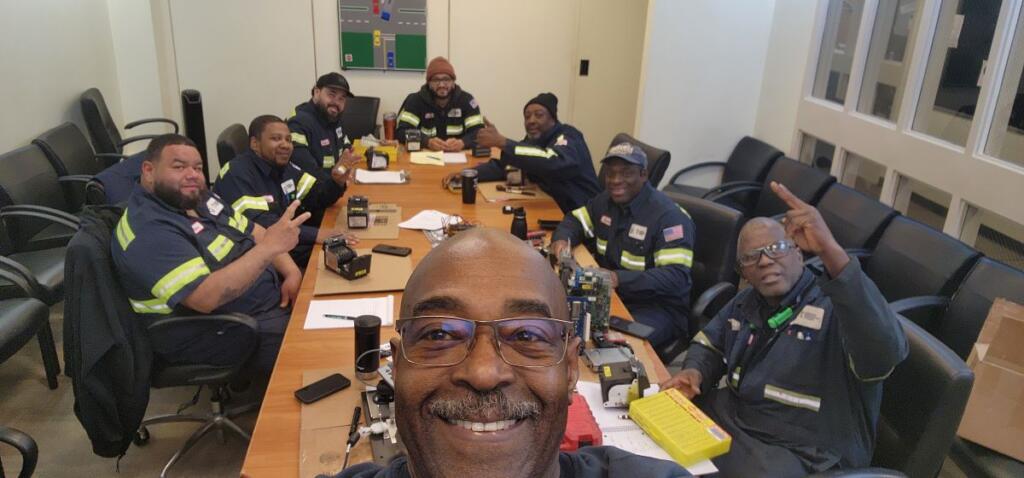
Whether trainees have years of experience or are just starting out, training is hands-on beginning to end.
“This was one of the best trainings I have ever had. I learned everything there is to know about the farebox,” says Matthew. “We had fun. We had laughs. Mike answered all my questions and was extremely friendly. In our profession, you see a lot of grumpy dudes and he was the opposite.”
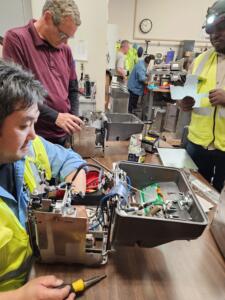
Mike explains that he goes through the maintenance process on each piece of equipment step-by-step with each attendee physically performing each task on a training or spare device. He makes sure they understand the task and can perform it independently before moving onto the next step, repeating instruction with up close demonstrations as needed. And he warns against attendees getting ahead of themselves and skipping to the next step before they are ready, risking damage to the parts they are servicing.
“I show them what needs to be done, down to ‘Take these two screws out, loosen those screws, and jiggle the cable connector, not the wires,’” Mike says. “Whether they are at engineer levels of experience or are just starting out in their job and have been winging it so far, everyone can learn something.”
No matter the level of experience, Mike takes maintenance trainees on a deep dive into how to fully take a farebox apart, perform maintenance, and put it back together again. He also covers niche topics such as controller boards, how to use the Customer Portal, and understanding data reporting. “I like to give people everything they need to do their jobs,” Mike says.
Operational advantages
Fare collection equipment is exposed to variable environmental and weather conditions, takes physical abuse from riders, and has some degradable parts. When proactively maintained, these factors should not affect the performance of the equipment. That’s why maintenance training is so important.
Comprehensive maintenance training helps transit agency staff become more efficient at their jobs. Learning how to keep equipment in good operational condition with preventive maintenance prevents down time and the need for corrective maintenance. This means investing in training allows transit agencies to save time and money.
“Some customers do a great job with preventive maintenance, and some don’t. Swapping out a TRiM rather than fixing it or running a cleaning card is the bare minimum,” says Mike. “When we train them, we do a deep dive into how to fully take a farebox apart and perform maintenance.”
Mike explains that in a farebox, particular attention needs to be paid to:
- Moving parts such as the TRiM and bill transport unit
- Anything that can build up dust and lint, like belts, gaskets, and O-rings
- Anything that can be affected be heat, cold, humidity, or dry air
“My agency was already great at preventive maintenance – the guy I took over for was doing it just how he was trained to by Genfare, so the fareboxes were in great condition. We don’t have a lot of issues because of the extensive PM,” says Matthew. “I told Mike Genfare makes a hell of a product because the only issues I see are from misuse, like liquids or gum.”
How to level up your maintenance program
Beyond keeping staff well-trained on maintenance, some tips Mike and Matthew shared for agencies looking to level up their maintenance program include:
Keep spare parts on hand
A robust inventory prevents maintenance delays waiting for shipments. “I have every harness and every connector I need. I keep plenty of consumables like belts on hand and reorder before it gets low,” says Matthew.
Test parts when they arrive
If you know they are good before they get checked into inventory and go onto the shelf, you’ll ensure they work when you need them on the spot.
Avoid third-party repair vendors
“There have been several times I’ve had customers tell me they have had to rework third-party repairs due to lower-quality work,” says Mike.
Keep preventive maintenance on schedule
Consider using software tools to schedule and track preventive maintenance needs. This can be specific to fare collection, like the device management functions in Genfare Link, or be used across the fleet.
Try a test swap
For some parts, like controller boards, swap out the component with one that you know works and see if that resolves the problem. If it doesn’t, the issue is more likely to be with a cable or something else.
Make documentation accessible
The Customer Portal has how-to videos and documents about almost every aspect of fare collection maintenance. Technicians can access it directly on the portal, or agencies can keep hard copies in the garage and digital copies on its servers. “Transit agencies tend to think mechanics don’t need spec sheets; they just need a wrench and a screwdriver,” says Mike.
Get trained
 Whether you’re implementing a brand-new fare collection solution, want to dig deeper into the reporting capabilities of your software, or need to get new hires up to speed on maintaining your existing hardware, Genfare can create a training package for you.
Our training engineers can spend an hour, a day, or even a week conducting hands-on in-person sessions at your agency or our Chicago-area facility. Software and reporting training is also available remotely via videoconference. Plus, on-demand training is available 24/7 on our Customer Portal.
To schedule maintenance training for your transit agency, contact your Customer Care partner.