
Luis Cantu is a Genfare program manager who oversees the end-to-end implementation of fare collection technology and software solutions for public transit agencies of all sizes and complexities.
A Chicago native, Lu got his start by building fare collection equipment from scratch and went on to a 25-year career at The Chicago Transit Authority (CTA). He’s now back with Genfare, using his decades of experience and accomplishments to ensure that hardware installation and SaaS backend implementations are completed on time and within budget. Keep reading the employee spotlight to see how Lu helps others achieve their best through training and mentoring, and who’s following in his footsteps.
Highlights
- Education: Bachelor’s Degree, business management, DePaul University
- Employment: Transitioned CTA from tokens to magnetic cards; introduced the first smart card account-based system in Chicago (Chicago Card Plus); Kathy Osterman Award nominee.
- Community roles: Conference President, St. Vincent DePaul Society; Board Member, Chicago Catholic Archdiocese Saint Vincent DePaul Society.
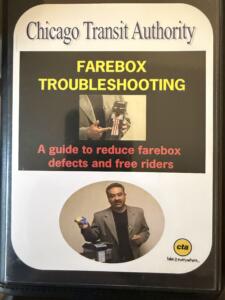
How did you get your start in transit?
It actually started in trade school. My first job out of school was with Concord Computing, working on back-end financial processing for Chicago — things like ATMs and check approval systems. I then heard Genfare was hiring. This was back in the ’80s, and I was making $4.50 an hour. Genfare was paying $6. I said, “I’ll take it!”
So, those early days built your skills foundation?
Part of our training back then was building fareboxes from scratch. We knew every single component and circuit board because we were the ones putting them together. When we eventually went into the field to set up bus garages for the CTA contract, we were so fast at troubleshooting because we used to make games out of it. No one had ever seen that before.
How did you end up in the Chicago Transit Authority’s C-suite offices?
I held almost every role you can imagine. At one point, I was responsible for about 2,500 buses, 144 rail stations, and a staff of 300. When CTA took over the Genfare contract, I became a unit supervisor for CTA and ran the south side for them. I got promoted to a manager on the bus side and started handling a call center for CTA dealing with all defects for fareboxes and equipment. From there, I was a system supervisor, a manager on the bus side, and eventually the general manager running the whole thing at CTA — bus and rail. When I left, I was the deputy chief information officer.
Did those early experiences shape your work style?
Because I started at the bottom, I knew exactly what it took to get the job done. I also spent a decade in the parking industry, helping turn around the Chicago parking meter system and serving as a Midwest director for new technology implementation. Whether it’s transit or parking, I’ve always been the guy who steps in, cleans up the procedures, and makes sure things work. That’s what I do.
How does your expertise benefit Genfare partner agencies?
I can get things done quickly. What would take two or three weeks, I sometimes can get done in a matter of hours. I also love training. I make sure our customers know exactly what to do, how to do it, and why we’re doing this.
You’re known as a go-to person in a crisis. What does that look like for you?
I call it being thrown into the meat grinder. I don’t get riled or scared; I look at the math and figure out a way to help the team succeed. Most examples involve determining the required resources, budget, and overall process. You first need to establish the end date, then work backward to calculate the necessary quotas and timelines. If you properly manage the process, you can step in as needed and make the appropriate adjustments along the way.
You’re a “people-first” manager. Where does that drive come from?
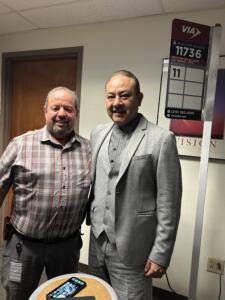 I’ve always believed that if people feel you care about them, that you’re truly invested in them as a person, they’ll go the extra mile. Early in my career, my employers would buy our uniforms, and they always fed us. As a supervisor, I’d do the same, and I’d also make sure they could stay warm when they were working in the freezing Chicago cold. I generally love talking to people and helping them solve problems.
What is the most important trend you’re seeing in public transit?
I think the biggest thing is the ease of use for transit riders to ride between systems—bus, on-demand vehicles, paratransit, and rail. How do you put that together so it’s an ecosystem? Genfare provides different solutions. It could be wayfinding, maybe through an app, or with payment options such as an account-based fare platform, or fare capping. That encourages more riders, and ridership has a direct impact on capital projects; the higher the demand, the more money the transit agency gets to buy buses and offer more features. Everyone benefits.
What is a big question facing transit agencies today?
One of the toughest things transit agencies are considering is free rides. Even if you allow people to ride for free, you need to record how many people are actually riding. Part of my background is in auditing; when the Regional Transportation Authority Triennial Audit is performed, you need to prove to the auditors that these are actual people, and you’re not just throwing them numbers. An integrated fare collection system provides that proof.
You’re working on the VIA San Antonio project with your son. Tell us more!
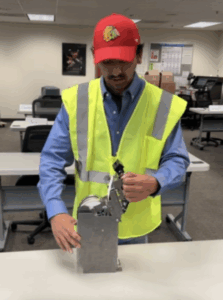 My son is a Genfare Managed Services Supervisor in San Antonio. When we got the San Antonio contract, we split the shifts while ensuring the new fareboxes were fully operational. I stayed down there and had the morning shift, and he had the overnight shift. He is now an expert with fast fare and open payment operation. He can fix the farebox faster than I. Now I ask him questions on how to fix! VIA liked the structure of Genfare’s User Acceptance Testing (UAT) so much that they’re having all the vendors do this now. Now, we’re working on phase two.
What makes Chicago special to you?
Chicago is home. I grew up here in the 70s. I’ve lived in many neighborhoods, but most of my life was spent in the Wrigley Field area [where the Chicago Cubs baseball team plays], and my family is still all right here. Professionally, the CTA is where I really matured and moved into senior leadership.
You’ve been a nominee for the city’s Kathy Osterman Award, which honors City of Chicago employees.
Chicago is a city that involves people and recognizes their hard work. I was a runner up for a supervisory award when Mayor Daley was in office.
Give us an example!
I managed the fare equipment for the July 3rd fireworks when a million people descended on downtown. It was an incredible challenge that I loved. I would pull the Genfare CENTSaBILL® fareboxes off the buses, give them their own power supply and that worked well to handle the crowds. I was also responsible for counting the ridership going to and from the event.
Did you use public transit as a kid?
Yes, I grew up using the “super transfer” system. It was basically a day pass that let you ride everywhere, and years later this came full circle at the CTA. I was there when we were transitioning the entire city away from physical tokens and paper transfers. I helped introduce that first CTA smart card stored-value system. I knew how the riders felt; I had been one of those kids on the bus decades earlier.
You’re very active in the Chicago Catholic community.
I’m the Conference President for the St. Vincent de Paul Society and a board member for the Chicago Archdiocese St. Vincent de Paul Society. We focus on helping people in need. Right now, I’m building a program called LIFT (Life Improvement Financial Training). It’s designed to teach skills like budgeting and basics about AI to give people better opportunities. I’m hoping to officially launch that by the end of the year.
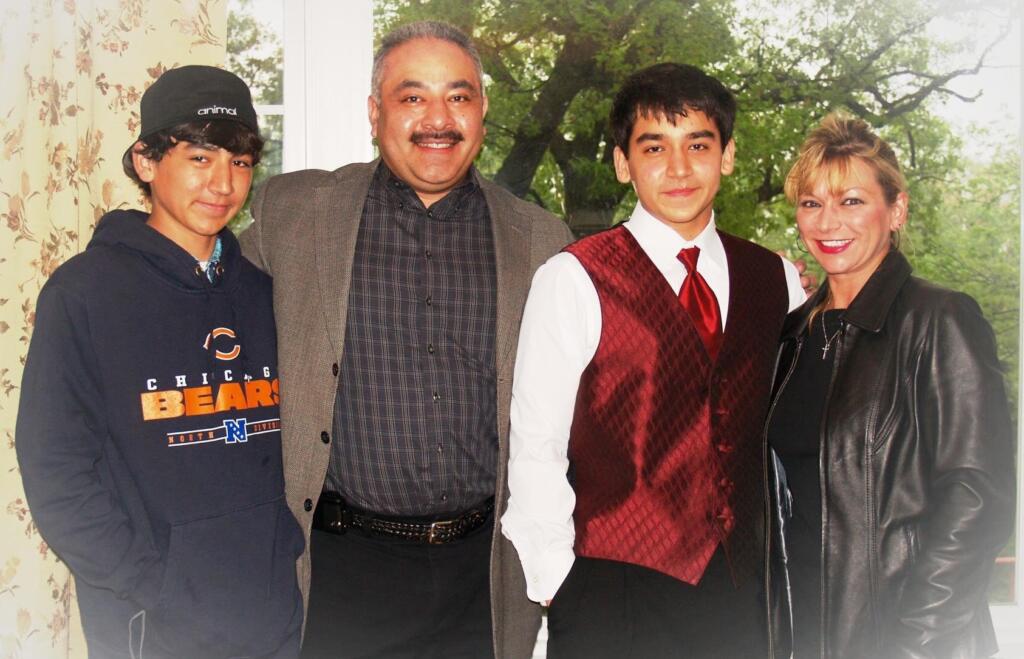
Tell us a bit about your family and your hobbies.
I’ve been married to my wife, Kathy, for over 38 years—we actually met back when I was first working at Genfare. I have two sons; Anthony is at Genfare in San Antonio, and Michael, my oldest, is a data scientist in New York working for Disney. For hobbies, I love playing chess and I’m very active in my church as a Sunday lector. I get bored easily, so I’m always moving, training, or finding something new to do!
What keeps you motivated?
I like knowing that I’m making a difference. And when I came back to Genfare, it felt like I was coming home again. When I started at Genfare, we were all young kids here, we were all friends. Now I’m back and I like this feeling.