
UPDATE: Rogelio was promoted to operations manager effective August 17, 2026, replacing Joe Costello as Joe transitions away from the role ahead of his upcoming retirement. Rogelio will oversee hardware quality, assembly, shipping/receiving, and repairs in his new role.
Rogelio Vicencio is Genfare’s manager, Managed Services, leading efficient teams in Miami and Illinois that keep public transit agencies’ fare collection systems running smoothly. With degrees in industrial engineering and business administration and as an ASQ Certified Six Sigma Green Belt (CSSGB), Rogelio is uniquely qualified to support his agency partners in serving their riders and communities. He recently won Genfare’s President’s Award for exceptional leadership and for making a companywide impact on process improvement.
Keep reading the employee spotlight to see how Rogelio helped Genfare reduce average time-to-repair by 80 percent, his perspectives on continuous improvement, and learn what game he plays that exercises one of his favorite skills: problem solving.
Genfare is bringing teams closer to agency partners. How are you involved?
We are building service centers in places like Miami to provide a faster response and a stronger partnership with agencies. I’ve recently relocated from Chicago to Miami, and I’m in charge of the repair teams in Elk Grove Village, Illinois, and the new Miami service center.
You’ve said you’re obsessed with solving complex problems. Tell us about your background.
I come from a manufacturing and operations background, with a strong focus on lean manufacturing and continuous improvement. I also worked for Crane, a current Genfare supplier, and so the field services knowledge I brought with me has helped us to do things we weren’t able to do before.
 Genfare provides managed services directly. Why is this important?
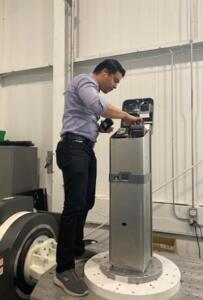
Managed services is not just about the repairs and maintenance; it’s about gaining a partner that is going to take responsibility for system performance. By leveraging our expertise, transit agency partners can focus on their normal operation, while we make sure that their fare collection equipment and system remain stable, reliable, and scalable.
How exactly does your team support transit agency partners?
There are three major ways: reliability, responsiveness, and continuous improvement. Our preventive maintenance programs minimize the downtime of your equipment and reduce unexpected failures and extend equipment lifetime. Our local service teams address failures in the field, so equipment is back in service as soon as possible.
I hear you’ve had impressive results with continuous improvement!
We’ve been able to reduce our average repair time by 80 percent by applying proven methodologies like Kaizen [a continuous improvement philosophy], process mapping [for analyzing workflows], and problem solving. Three years ago, our average time-to-repair was 40 days. Today, we repair units in about 10 to 12 days.
You say your team is proactive rather than reactive. What’s that like in practice?
We have regular meetings with customers, I personally visit the BRTs [bus rapid transit system] to see how all the machines are working and that the customer is happy. Digitization is also important — we use digital data from our Genfare Link cloud-based platform to predict, identify, and resolve farebox issues before they start. I can see in the device manager what is happening in the field, if a machine is down or is going to present some issues.
How do you sustain these goals?
We have this mindset of always trying to maximize our internal efficiency, making our process faster, better, and more reliable. We look at the data to find tendencies, trends, or systematic problems, and we share all this information across different locations. That improves customer satisfaction as well.
What do you enjoy about working in public transit?
I was used to only seeing the improvements inside a factory. I’m passionate about continuous improvement and lean manufacturing, and now I can see the improvements and apply all of that in the real world — in the field.
What’s it like working with your Genfare colleagues?
You know, one thing I enjoy is that the people at Genfare are really open to change. That’s amazing, because I’ve been in different companies where implementing a change is super difficult. With Genfare, we make sure our team members are part of the project or initiative, and they will help you. In field services, we have implemented a system so they can share improvement ideas.
You’re originally from Mexico. Where is your hometown?
I was born in Madero, Tamaulipas, in northern Mexico, but I was raised in Veracruz. I earned my bachelor’s degree from Instituto Tecnológico de Ciudad Madero (ITCM). Later, I completed my MBA in Querétaro, Mexico.
 How is your family enjoying their new home in Miami?
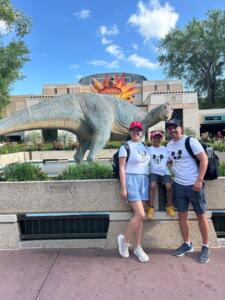
I’m exploring the city with my wife, Mara, and son, Israel, age seven. We like to spend time outdoors. We’ve been living in a few different places in a short period of time, and my family supports that.
Is it true that you study on your downtime?
I like continuous learning, especially in operations improvements and business development, so I spend time reading and working on ideas on how I can improve operations both professionally and in my own ventures.
What hobbies keep you busy when you’re not focused on work?
I like playing chess for fun. You not only have to think about the next move, but you’ve got to be thinking about the next four or five moves. I also used to play football (soccer), and I follow Mexico’s Club América team. In Chicago, I followed the Chicago Cubs, and I’m trying to find a team to follow in Miami!